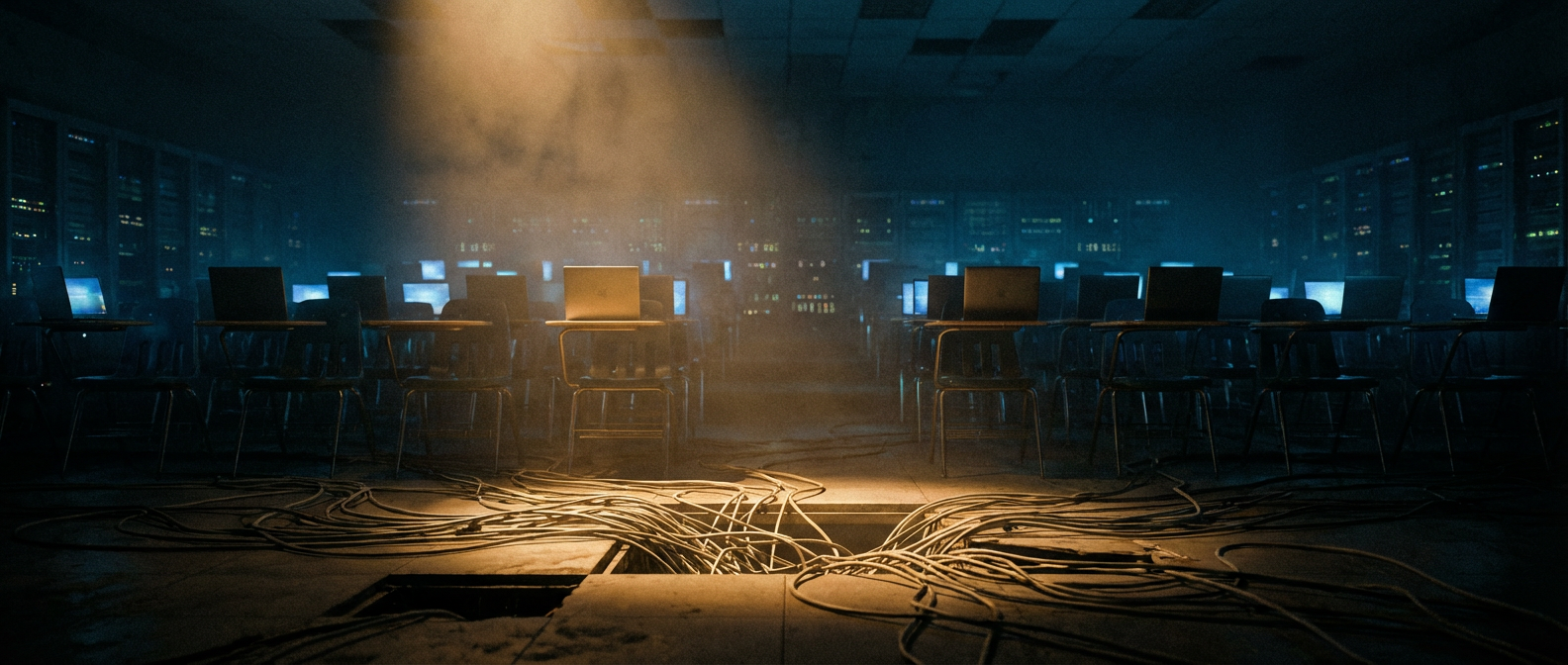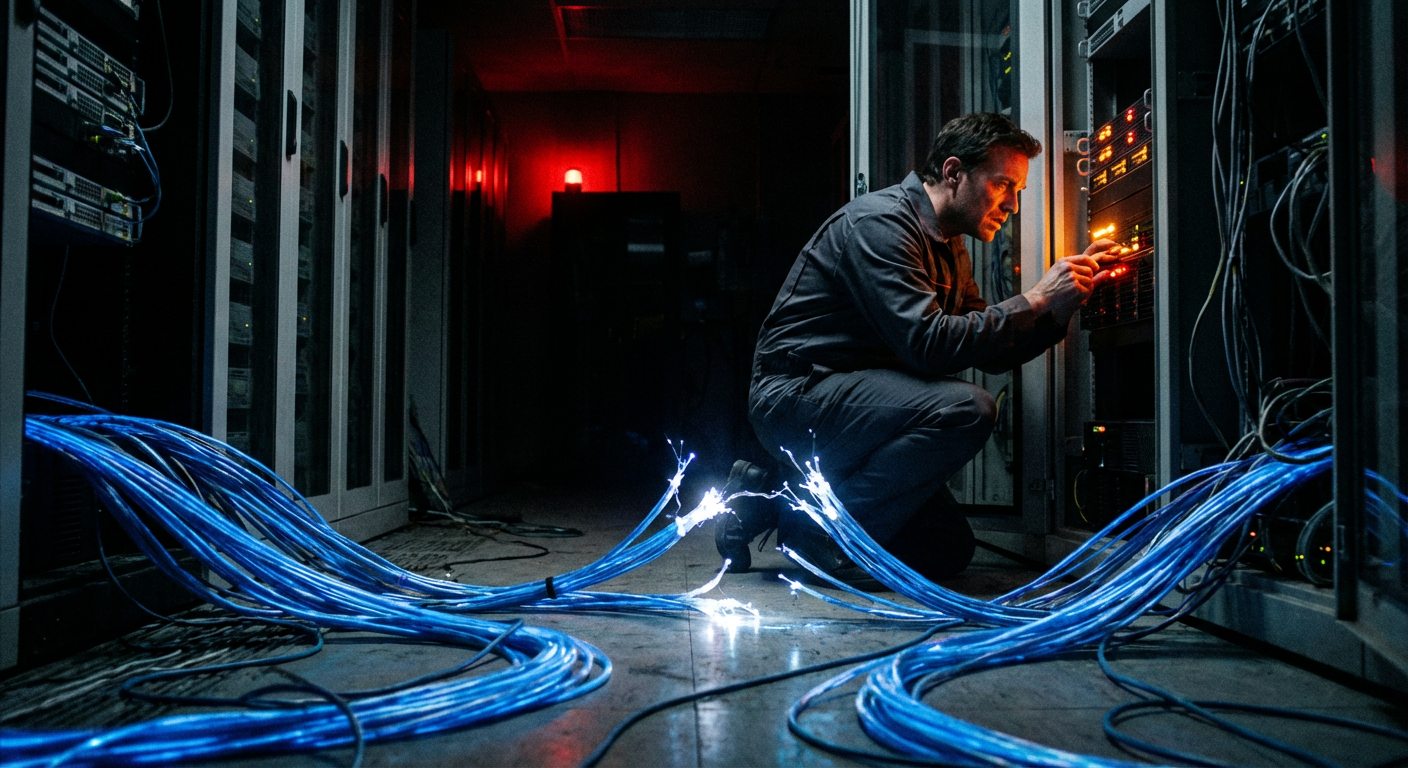
On Monday evening, April 6, 2026, Russia’s dominant state-run telecommunications provider came under a large-scale distributed denial-of-service attack. The target was Rostelecom — the backbone of Russia’s domestic internet infrastructure. The immediate consequences rippled out across roughly 30 Russian cities: online banking became unreachable, the government services portal Gosuslugi went dark, the gaming platform Steam dropped offline, the domestic video platform Rutube became inaccessible, and financial transactions stalled for users across the country.
Rostelecom told state-owned media the attack was “quickly contained.” That framing obscures more than it reveals. The disruption to internet services was not a direct consequence of the attack volume itself — it was a consequence of the emergency traffic filtering Rostelecom deployed to mitigate the attack. The cure, in other words, was part of the problem.
This incident is not an isolated event. It arrives in the context of an accelerating pattern of infrastructure disruptions inside Russia, a week after a separate major outage knocked out banking apps and payment systems across the country. Together, these incidents raise pointed questions about the real-world resilience of Russia’s sovereign internet ambitions — and about who is doing the attacking.
What Is Rostelecom and Why It Is a High-Value Target
Rostelecom is not merely Russia’s largest internet service provider. It is the infrastructural spine of Russian domestic connectivity — a state-controlled entity that operates the physical network layer underlying most of the country’s civilian and government digital communications. It manages fiber networks, mobile infrastructure, cloud services, and the technical apparatus of the Runet project itself.
When you target Rostelecom, you are not targeting a company. You are targeting the operator of record for Russian state digital infrastructure. That makes it one of the highest-value DDoS targets in the world from an adversarial standpoint — and one of the most consequential to knock offline, even temporarily.
The attack disrupted services that millions of ordinary Russians depend on daily: the ability to pay by card, access government portals, and use banking applications. The range of affected services — private platforms like Steam alongside state infrastructure like Gosuslugi — illustrates how deeply Rostelecom’s network underpins the full stack of Russia’s digital economy.
As we have documented previously, telecommunication sector breaches and attacks carry systemic risk precisely because of this centralization. A single provider operating at national scale creates a single failure domain. When that provider comes under attack, the blast radius is the entire country.
The Runet Problem: Sovereignty That Cuts Both Ways
Russia’s “Runet” project — the sovereign internet initiative formalized under legislation passed in 2019 — was explicitly designed to make Russia’s domestic internet function independently from the global web. The stated rationale was resilience: the ability to maintain connectivity inside Russia even if external actors attempted to sever the country’s international links.
The Rostelecom attack exposes the fundamental tension in that design philosophy.
Centralizing internet infrastructure under state control does produce a certain kind of resilience. It allows the state to implement emergency filtering quickly, to cut off specific traffic types at a national level, and to maintain whitelisted services — government-approved destinations that remain accessible even during active mitigation. During the April 6 attack, some users found themselves able to access only these whitelisted resources as Rostelecom deployed its emergency filtering apparatus. Everything else — the open internet — was either degraded or unreachable.
But that same centralization is precisely what makes Rostelecom such a devastatingly attractive target. When a single entity operates the critical path for national internet traffic, attacking that entity produces national-scale disruption. Distributed, decentralized internet infrastructure is inherently more resilient to DDoS attacks because there is no single chokepoint to overwhelm. Centralized sovereign infrastructure trades that resilience for state control.
The Runet project has, in effect, created the largest possible attack surface at the most critical possible layer of the network stack — and then concentrated responsibility for defending it into a single state-controlled entity.
The Whitelisting Phenomenon
One of the more striking details of the Rostelecom attack response was the emergence of whitelist-only access for affected users. During peak mitigation, some internet users found themselves restricted to a curated list of government-approved services. Everything outside that approved list was inaccessible.
This is not an accidental feature of Rostelecom’s response architecture — it is a designed capability. The Runet sovereign internet framework includes technical provisions for precisely this kind of tiered access control: the ability to maintain availability of designated critical services while blocking or throttling everything else during a network-level emergency.
From a pure traffic management standpoint, this approach is defensible. During an active volumetric DDoS attack of sufficient scale, prioritizing legitimate traffic from known-good destinations over general internet access is a standard mitigation technique. ISPs around the world implement similar triage mechanisms.
What distinguishes the Russian implementation is that the whitelist itself is a curated, state-controlled artifact. The services that remain accessible during a crisis are the ones the state has pre-designated as worthy of prioritized access. That list reflects political and administrative priorities, not purely technical ones. Steam — a private gaming platform with no particular national strategic importance — did not make the list. Gosuslugi, the government services portal, did.
The attack thus produced a real-world demonstration of what “sovereign internet” means in practice for ordinary Russians: in an emergency, you get access to what the state decides you get access to.
A Pattern of Disruption: The Week Before
The April 6 attack did not arrive without context. The week prior, a separate outage had knocked out banking applications and payment systems across Russia for several hours. The impact was tangible and widespread: customers in multiple regions, including Moscow, were unable to pay by card, withdraw cash from ATMs, or access mobile banking platforms.
The cause of that prior outage remained disputed. Russian media sources offered competing explanations — some attributed the failure to government IP filtering measures inadvertently disrupting banking infrastructure, while others pointed to an internal failure at Sberbank, Russia’s largest bank. No definitive cause was publicly confirmed.
What matters from an analytical standpoint is the pattern: two significant disruptions to core Russian financial and communications infrastructure within a single week. Whether or not the incidents are connected at the technical level, they are connected at the strategic level — they expose the same underlying vulnerability. Russia’s centralized, state-controlled digital infrastructure, built for sovereign control, has a concentrated attack surface that proves difficult to defend and easy to exploit.
The broader trend of adversaries specifically targeting Russian infrastructure is one we have been tracking closely. Our analysis of the emerging phenomenon of digital blowback against Russia documented the shift in threat geography: Russia is no longer only an exporter of cyber aggression. It has become a target — and the targeting is becoming more sophisticated and more consequential over time.
Attribution: Who Attacked Rostelecom?
No group has publicly claimed responsibility for the April 6 attack as of this writing. Attribution for large-scale DDoS operations is inherently difficult, and the absence of a claim does not rule out any particular actor category. Several possibilities warrant consideration.
Ukrainian-linked hacktivists and IT Army operations. Since Russia’s full-scale invasion of Ukraine in 2022, Ukrainian-aligned hacktivist networks — most prominently the IT Army of Ukraine — have conducted sustained DDoS campaigns against Russian infrastructure. Rostelecom has been a target of previous IT Army operations. A large-scale attack against the company fits the profile and the operational tempo of these groups. The timing — arriving during an active military conflict — is consistent with the sustained pressure campaign Ukraine and its supporters have maintained against Russian digital infrastructure.
Independent hacktivist actors. The broader hacktivist ecosystem that mobilized in response to the Ukraine invasion has produced a large population of actors with both the motivation and the technical capability to execute significant DDoS attacks. These groups operate with varying degrees of coordination and often do not claim responsibility for every operation they conduct.
State-sponsored actors. The involvement of a nation-state actor — whether Ukrainian, NATO-aligned, or otherwise — cannot be excluded. DDoS attacks of the scale described, capable of forcing emergency-level filtering responses from a major national ISP, require either a very large botnet or significant organizational coordination. State-level resources can provide both.
Financially motivated actors. Less likely given the target profile and geopolitical context, but large telecom providers are occasionally targeted by extortion-motivated DDoS operators. No ransom demand has been reported in connection with this incident.
The geopolitical context strongly favors some form of Ukraine conflict-related motivation, whether the actors are state-directed, state-tolerated, or independently aligned with Ukrainian interests. Russia’s deliberate targeting of Ukrainian civilian infrastructure throughout the conflict — power grids, communications systems, water utilities — has generated substantial adversarial intent among those who have opposed those operations. The Russian state’s own approach to critical infrastructure warfare, including attacks attributed to Russian state actors against critical infrastructure in allied nations, has established a precedent that adversaries are now applying in the other direction.
Implications for Russia’s Digital Sovereignty Strategy
The Rostelecom attack lands as an uncomfortable stress test for the entire Runet strategic framework. Years of investment in sovereign internet architecture — technical controls, filtering infrastructure, whitelisting capabilities, centralized routing — did not prevent the attack from disrupting services across 30 cities. The emergency mitigation response, while credited with “quickly containing” the attack, itself produced significant collateral disruption to ordinary users.
This points to a structural problem that no amount of filtering infrastructure can fully resolve. The Runet project’s approach to sovereignty is fundamentally about control — control over what traffic traverses the network, what services are accessible, and what the state can shut down or prioritize. It is not, primarily, an approach to resilience in the face of external attack. A DDoS attack does not care about filtering lists or whitelists. It overwhelms capacity. The more centralized the infrastructure that capacity is concentrated in, the more effective the attack.
There is also an operational security dimension. The emergency filtering measures Rostelecom deployed — and the whitelist-only access state that some users experienced — provided a real-world demonstration of the sovereign internet’s capabilities to Russia’s own population. Whatever the strategic value of that demonstration, it occurred under adversarial conditions and on an adversary-chosen timeline.
The Telecom Attack Surface Problem
The Rostelecom incident is a case study in the specific vulnerabilities that large national telecommunications providers carry — vulnerabilities that are distinct from those faced by enterprises or smaller ISPs.
At national scale, a telecom provider cannot easily distribute its attack surface. Its network infrastructure must be reachable — that is its entire purpose. Defending availability while maintaining reachability against a sufficiently resourced adversary conducting a volumetric DDoS attack requires significant mitigation capacity, and even that capacity has limits. The emergency filtering response Rostelecom deployed essentially confirmed that the attack exceeded its standard mitigation envelope.
For security teams and incident responders assessing their own organization’s resilience posture against DDoS and critical infrastructure attacks, this incident reinforces a fundamental question: what is your organization’s actual capacity to absorb volumetric attacks, and what does your mitigation response look like when that capacity is exceeded? Understanding your own thresholds before an adversary tests them for you is the core function of mature incident response planning. Organizations looking to benchmark that posture honestly should start with an IR Maturity Assessment that maps current capabilities against realistic threat scenarios.
What Happens Next
As of Tuesday, April 7, internet users across Russia continued to report problems accessing government websites — evidence that the disruption did not fully resolve when Rostelecom declared the attack contained. The persistence of post-attack access issues suggests either residual filtering measures still in place, infrastructure that has not fully recovered, or continued low-level attack traffic.
Rostelecom has provided no technical details about the attack’s characteristics — its volume, the botnet infrastructure behind it, or the specific filtering measures deployed. That opacity is standard for a state-run entity in the current geopolitical environment, but it limits the ability of the broader security community to learn from the incident.
What is clear is that the attack succeeded in its primary objective: it demonstrated that Russia’s largest telecom provider, the operator of its sovereign internet infrastructure, is vulnerable to large-scale disruption. That is a message with strategic weight that extends well beyond the hours of service degradation on April 6, 2026.
The Runet project was built to demonstrate that Russia could control and protect its own digital territory. The Rostelecom attack demonstrated something different: that concentrated control creates concentrated risk, and that the very architecture designed to make Russia’s internet sovereign also makes it a singular, high-value target for anyone with the capability and motivation to attack it.
Breached Company provides independent analysis of cybersecurity incidents and threat intelligence. If your organization operates telecommunications or critical infrastructure and wants to understand your DDoS resilience posture, start with our IR Maturity Assessment.