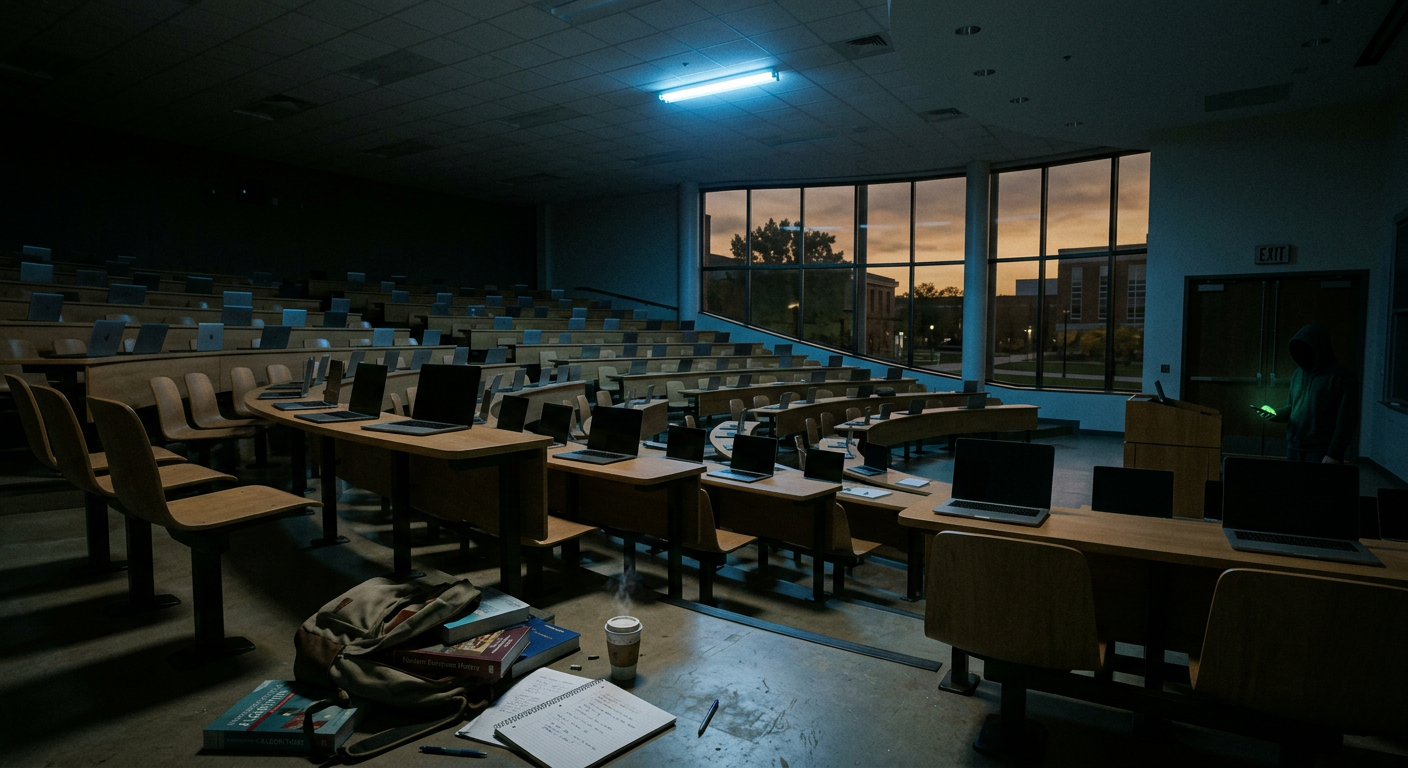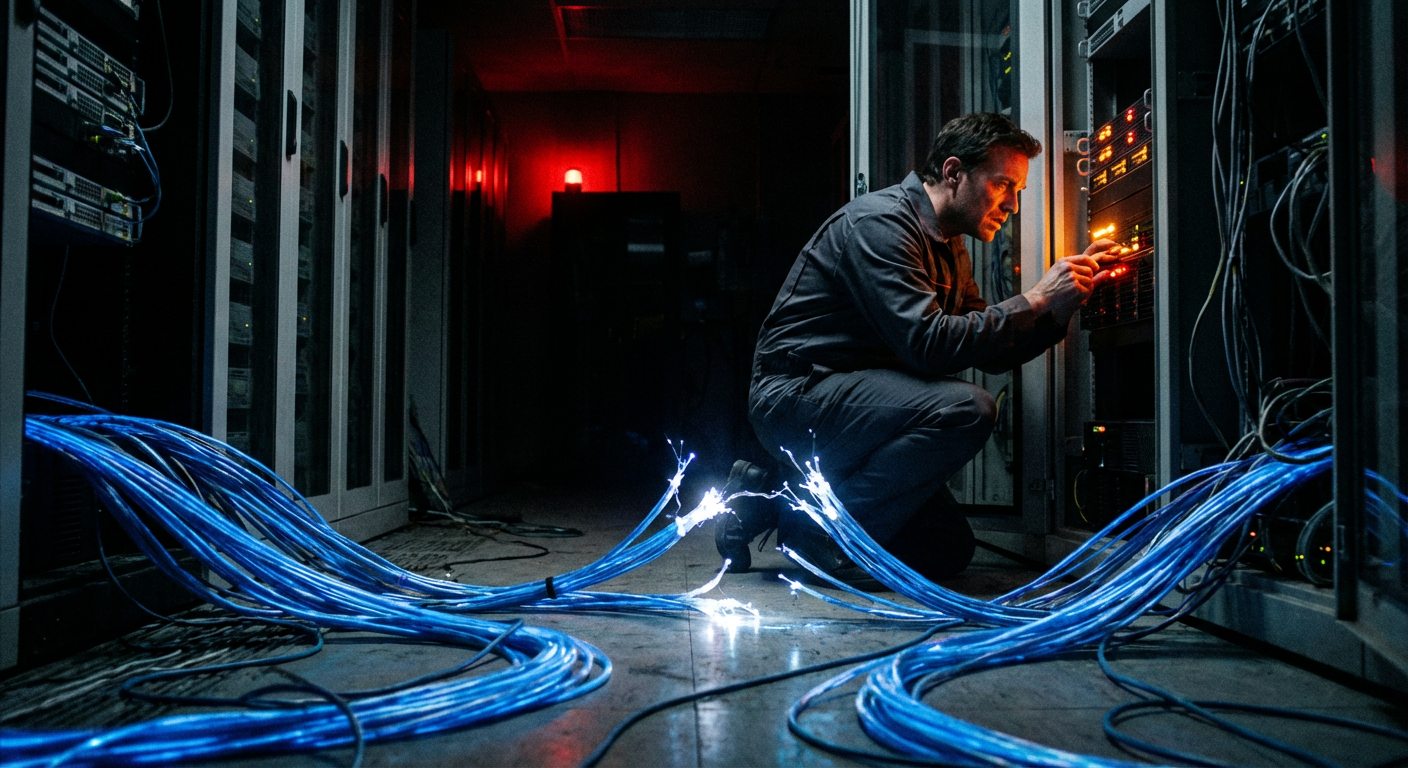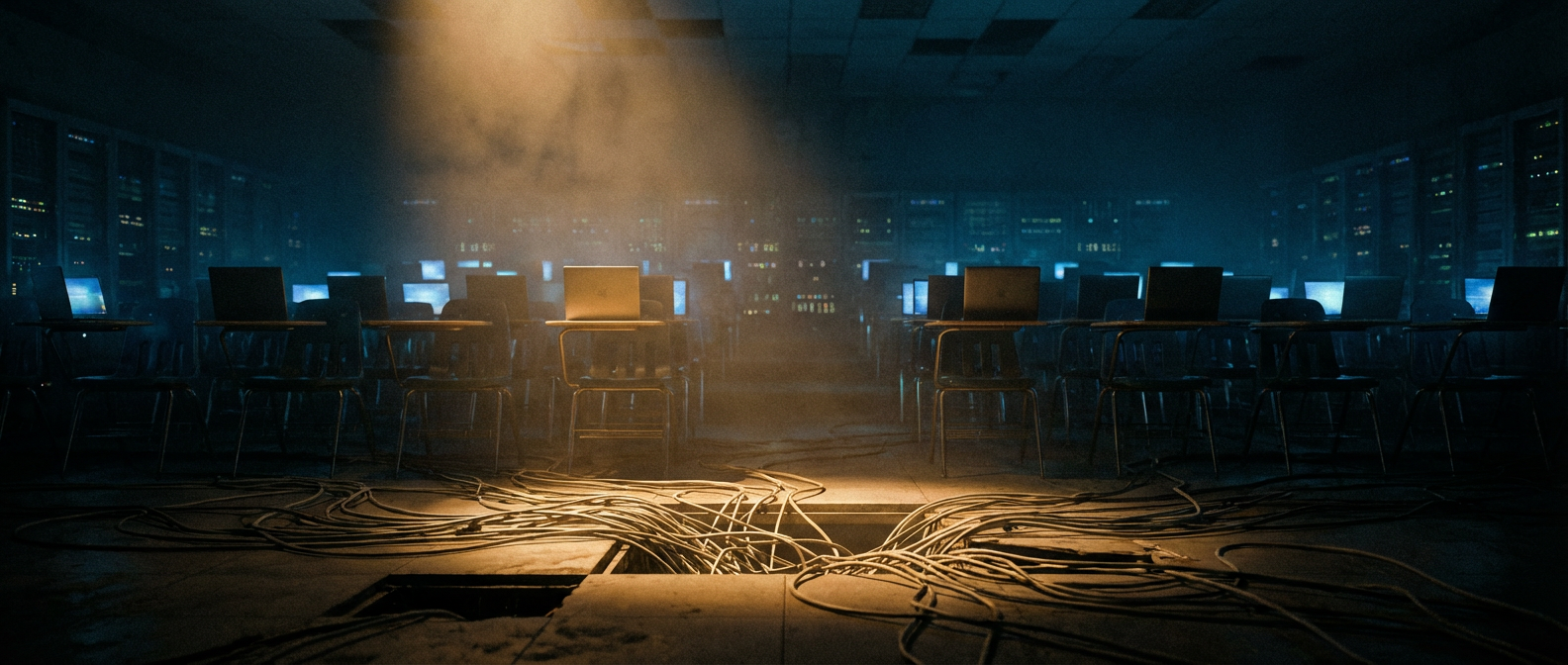
On Friday, April 4, 2026, the Education Authority for Northern Ireland confirmed what students and teachers had already discovered the hard way: the C2K network — the centralised IT infrastructure that connects every school in the region — had been targeted in a cyberattack.
GCSE students could not reach their revision materials. A-level students could not access coursework due within days. AS-level pupils could not contact teachers. And every one of those students was locked out simultaneously, because every school in Northern Ireland runs on the same network.
This is the cost of centralisation without adequate security architecture. And it arrived at the worst possible moment.
What Is C2K and Why Does It Matter
C2K is not a single school’s IT system. It is the managed IT network for every school in Northern Ireland, administered by the Education Authority. That means the same infrastructure, the same authentication systems, the same access controls, and — critically — the same attack surface serves post-primary and primary schools across the entire region.
The model has genuine advantages. Centralised procurement, consistent software deployments, standardised security policies, and economies of scale are real benefits, particularly for smaller schools that lack in-house IT staff. Northern Ireland’s education system adopted this approach to ensure that schools in rural areas have access to the same digital tools as those in urban centres.
But centralisation creates a concentration of risk that is difficult to overstate. When one network serves every school, a single successful intrusion does not affect one institution — it affects all of them at once. There is no natural firewall between schools. There is no geographic or organisational boundary that an attacker has to cross to move from one school’s data to another’s. The blast radius of a single intrusion event is, by design, the entire educational estate.
This is the same structural vulnerability that brought down Higham Lane School in Nuneaton in January 2026 — a single institution where a cyberattack forced a two-week shutdown, taking every digital system with it. In Northern Ireland, that scenario scaled to every school in the country simultaneously.
The Timing Was Not Coincidental
The attack hit during Easter, during exam season, during the period when students are most dependent on digital access to revision materials, coursework, and teacher communications.
This is not a coincidence. Attackers targeting educational institutions have long understood the academic calendar as a tactical tool. The summer exam season in the UK — with GCSEs and A-levels running from May through June — begins its preparatory phase in April. Easter revision is not optional for exam-year students; it is frequently when the most intensive independent study happens.
The Education Authority webinar held on Easter Tuesday, attended by more than 300 schools, underlines how serious the disruption was. Schools that should have been closed for the holiday opened their doors instead. Regent House in Newtownards, County Down, was among those that brought staff in on Easter Tuesday to help pupils reset passwords and restore access to accounts.
A steady stream of students arrived. Many of them were not there voluntarily — they were there because their coursework deadlines were approaching and their digital access had been severed.
The pattern is consistent. Chambersburg Area School District in Pennsylvania saw a ransomware attack disrupt the start of the school year, forcing class cancellations when students and teachers were most dependent on systems being ready. The Winona County ransomware attack in Minnesota in 2026 — detailed in our National Guard activation coverage — similarly exploited a moment of operational concentration. Attackers understand that high-dependency periods maximise leverage and disruption.
What Students Actually Lost
The EA statement described an IT disruption. The student accounts describe something closer to a crisis.
Daniel, an 18-year-old A-level student, was direct about the stakes: “I was talking to fellow pupils about it and they were all surprised. It was a bit worrying to be honest, because I have coursework due very soon.” He uses Microsoft Teams to contact teachers and receive coursework updates — and Teams was inaccessible.
Kaitlyn, 15, is preparing for GCSEs: “I wasn’t able to get into Teams so it means I wasn’t able to access the work I needed to do for my GCSEs. There was some revision sheets that I needed to do and some homework that I’d been set.” For GCSE students in the final weeks before examinations begin, missing revision deadlines has direct consequences.
Owen, 17, taking AS-levels, articulated the structural dependency clearly: “That’s where all the coursework is, and without it I can’t actually do anything.” He described feeling “a wee bit of panic.” That description is honest. When a student’s entire academic record — notes, coursework, drafts, teacher feedback — exists only in a cloud platform accessible through a single sign-on system, and that system goes down, there is no offline fallback.
Georgia, 16, had specific work she had intended to complete: “All our notes are on Teams and I was going to finish the second half of my book, and it wasn’t loading.” She had not expected to be travelling into school on Easter Tuesday.
The harm here is real and measurable. These are not hypothetical risks. These are students in exam years who experienced enforced disruption to their revision at a time when weeks of preparation matter.
The Microsoft Teams Dependency Problem
The accounts from students reveal a secondary issue beneath the primary C2K attack: the complete consolidation of educational workflow into Microsoft Teams.
Notes, coursework, homework, revision resources, teacher communications — all of it on Teams. This is the natural outcome of the past six years of accelerated digital transformation in education. The COVID-19 pandemic pushed schools to adopt cloud collaboration tools at speed, and Microsoft Teams became the dominant platform in UK and Irish educational settings.
That consolidation creates an educational version of the same problem C2K represents at the network level: a single platform failure severs access to everything simultaneously. When C2K authentication was compromised, it did not just prevent students from logging into one service — it prevented access to the platform where all of their work lived.
This is worth examining in the context of education sector cybersecurity broadly. The attack surface in education has shifted. Schools no longer primarily need to protect on-premises servers housing student records — they need to protect the authentication mechanisms that gate access to cloud-hosted environments where active educational work lives. An attack that disrupts identity management disrupts everything downstream from it.
What “Caught Early” and “Contained” Actually Means
Eve Bremner from the Education Authority provided carefully worded reassurances: “It was caught early, we’ve been advised it was contained, we’ve moved into that recovery phase now.” She noted that by Tuesday, 80 percent of post-primary schools were back online, and that there was “no evidence of data corruption or data leaving the system.”
These are meaningful statements. No evidence of data exfiltration is genuinely significant. If attackers were seeking to steal student or teacher personal data, there is — based on current information — no evidence that they succeeded. The EA also confirmed no evidence of “data corruption,” which suggests this was not a destructive ransomware payload designed to encrypt and render data unrecoverable.
What these statements do not tell us is also worth noting. “Caught early” describes detection timing, not entry point. The vulnerability that allowed initial access has not been publicly identified. The method of attack — whether credential stuffing, a phishing campaign targeting EA or school staff, exploitation of an unpatched vulnerability, or something else — has not been disclosed. The EA noted staff worked “around the clock” to restore systems, which suggests the containment effort was significant even if the ultimate impact was limited.
The 20 percent of post-primary schools that were not back online by Tuesday morning also deserve attention. Eighty percent recovery by Tuesday is a reasonable response speed. But the students and teachers in that remaining fifth experienced additional days of disruption.
For IT administrators in education, the practical question is not just whether data was stolen — it is how access was obtained, and whether the same entry point exists in your own infrastructure. That answer has not been made public.
The Centralisation Risk Is a Policy Risk
The C2K model is a procurement and governance decision as much as a technical one. Regional centralisation of school IT is a policy choice, and the security implications of that choice need to be built into the governance model from the outset.
This means that security investment for a centralised model needs to be proportionate to the concentration of risk, not proportionate to the cost savings the model generates. When every school in Northern Ireland depends on one network, the security budget for that network should reflect the fact that every school in Northern Ireland is the consequence of a failure.
It also means that incident response planning for a centralised model needs to account for the scale of impact. A webinar attended by 300 schools on Easter Tuesday is a meaningful response. It should also be a pre-planned response — part of a documented incident response capability that schools and the EA can activate immediately, not improvise under pressure.
If your organisation has not tested its incident response maturity against a scenario involving simultaneous multi-site access loss, the IR Maturity Assessment at ir.breached.company provides a structured framework to evaluate where your gaps are before an attacker identifies them for you.
What Education IT Administrators Need to Do Differently
The C2K incident is a case study in systemic risk that individual schools cannot manage — but it is also a reminder that school IT leadership has responsibilities even within a managed service environment.
Offline continuity plans must exist. When all digital systems are unavailable, what do students do? The answer cannot be “wait for the network to come back.” Exam-year students in particular need documented continuity arrangements: locally stored revision materials, physical copies of key resources, and teacher communications through alternative channels.
Authentication architecture deserves scrutiny. If a single set of credentials gates access to every platform a student uses, compromising that credential system is catastrophically effective. Multi-factor authentication, conditional access policies, and regular credential hygiene are not optional in educational environments any more than in enterprise ones.
Dependency mapping matters. The student accounts from this incident reveal that Teams is not just a communication tool in Northern Ireland’s schools — it is the repository for active coursework, teacher feedback, and revision materials. IT administrators and school leaders need to understand what they are actually dependent on and what the recovery path is if that dependency is severed.
Managed service is not managed risk. Schools using C2K — or any centralised managed service — remain responsible for their own incident response. The EA manages the network; individual schools need their own plans for what happens when the network goes down.
The education sector is under sustained pressure from attackers who understand exactly how disruptive a well-timed incident can be. The Higham Lane shutdown lasted two weeks. The C2K disruption lasted days. The next incident may be worse.
The students who came into Regent House on Easter Tuesday — expecting to be on holiday, finding themselves instead queuing to reset passwords — did not choose to be on the front line of a cybersecurity failure. The people who design and secure educational IT infrastructure did not have that choice for them.
The Education Authority confirmed on April 4, 2026 that C2K had been targeted in a cyberattack. Recovery operations continued through Easter week. No evidence of data exfiltration or corruption was confirmed at time of publication.