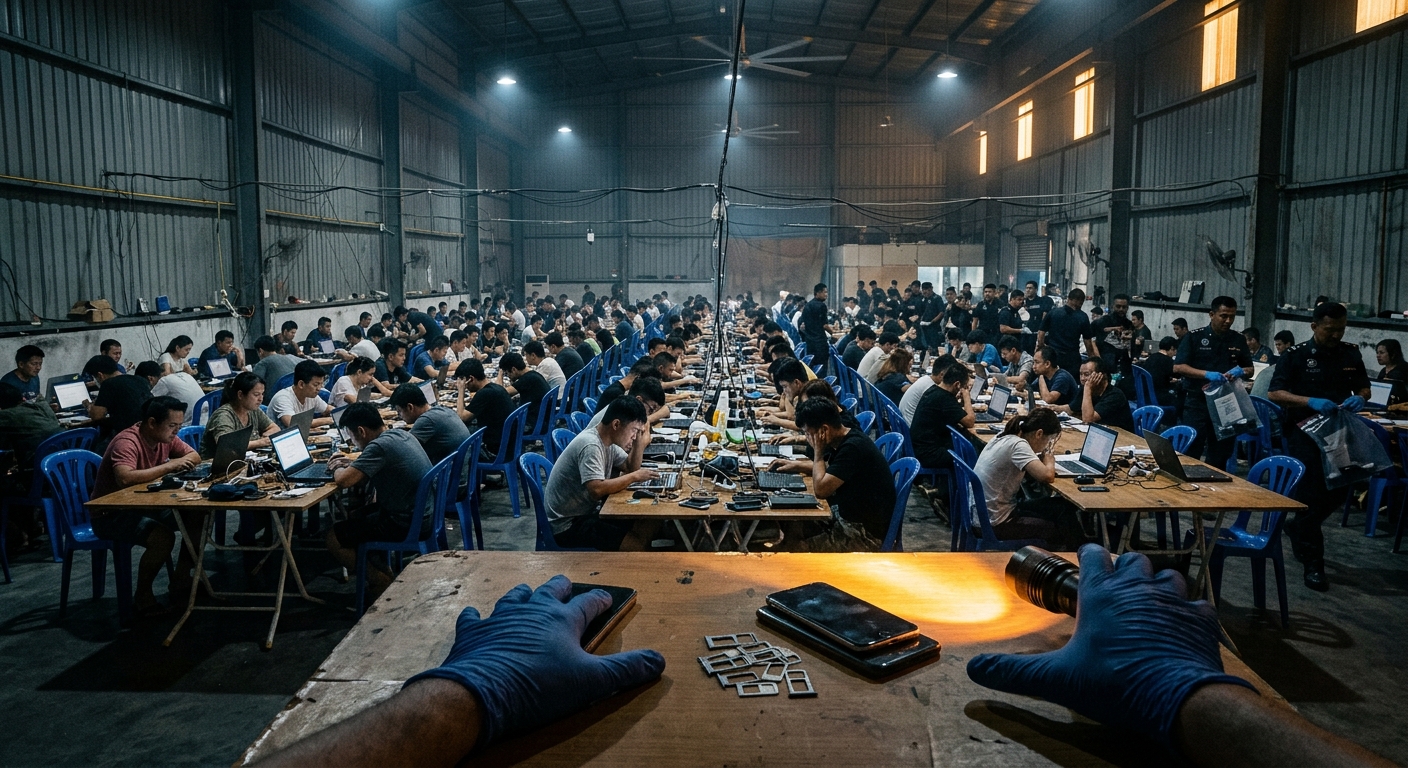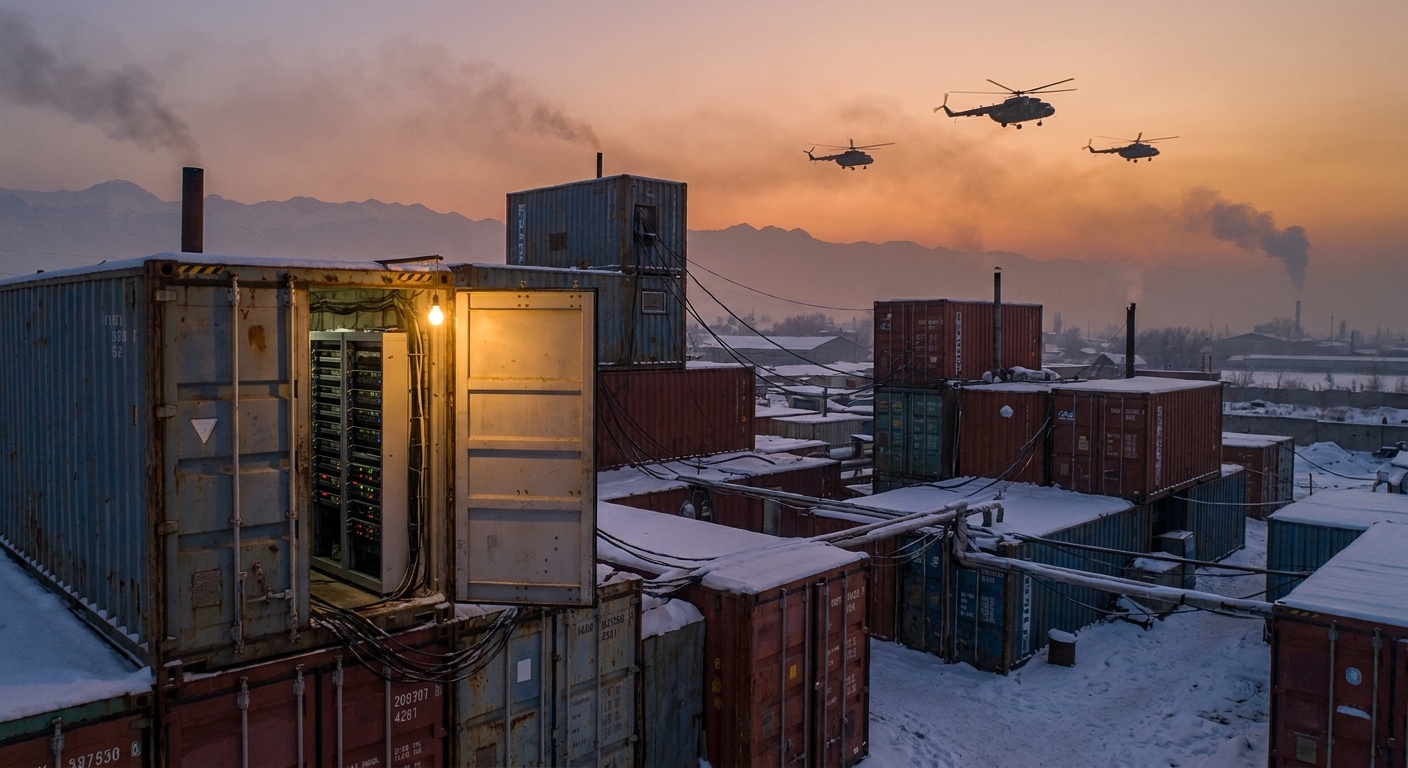
At approximately 12:00 UTC on April 15, 2026, Grinex — a cryptocurrency exchange operating out of Kyrgyzstan — was drained of approximately $13.7 million and immediately suspended operations.
The exchange’s statement blamed “Western Special Services.” It described the attack as demonstrating “an unprecedented level of resources and technological sophistication — capabilities typically available exclusively to the agencies of hostile states.” It framed the theft as a deliberate act of financial warfare against Russian interests, “coordinated with the specific objective of inflicting direct damage upon Russia’s financial sovereignty.”
These are extraordinary claims. They are also unverified. Independent blockchain intelligence firms Elliptic and TRM Labs reviewed the incident and published no technical evidence linking the theft to a state actor. What the blockchain trail does show is the movement of stolen funds through privacy-preserving swap techniques, rapid conversion from freezable stablecoins to non-freezable tokens, and routing through Ethereum and TRON networks in patterns consistent with experienced actors seeking to evade asset recovery.
Whether the attacker was a Western intelligence agency, a financially motivated criminal, or a rival in the Russian crypto-crime ecosystem, the story of Grinex is as much about what the exchange was as about who hacked it.
What Grinex Actually Is
Grinex is widely understood to be a rebranded version of Garantex.
Garantex was a Moscow-based cryptocurrency exchange sanctioned by the U.S. Treasury’s Office of Foreign Assets Control (OFAC) in April 2022, following an investigation that found the exchange had processed over $100 million in transactions linked to illicit activity — including payments associated with Conti ransomware, Hydra darknet market, and other sanctioned entities. The UK followed with its own sanctions.
In March 2025, a coordinated law enforcement action involving the U.S. DOJ, Europol, and German authorities seized Garantex’s domain and infrastructure and indicted its administrators. Within weeks, Grinex began operating — incorporated in Kyrgyzstan, using infrastructure and operational patterns that blockchain analysts said bore strong resemblance to Garantex’s prior operation. The U.S. and UK sanctioned Grinex in 2025.
Operating as a sanctioned exchange does not require legal compliance — it requires the technical capacity to continue processing transactions while evading enforcement. Grinex continued to attract volume from Russian users seeking to convert rubles to cryptocurrency and back, processing transactions from entities that could not access Western financial infrastructure. It was, in effect, part of the financial plumbing that allows sanctioned Russian entities — including ransomware operators, darknet market participants, and individuals subject to Western sanctions — to move money.
The Hack: What Happened
At noon UTC on April 15, an attacker gained access to Grinex’s operational systems and initiated a withdrawal of approximately one billion rubles, equivalent to roughly $13.7 million at current exchange rates.
The stolen funds were transferred initially in stablecoins — likely USDT or USDC — and then rapidly swapped into non-freezable tokens. This is a significant tactical detail. Stablecoins like USDT (Tether) can be frozen by the issuer if law enforcement or the issuer identifies the wallet addresses holding the assets. Sophisticated actors, whether criminal or state-sponsored, convert to non-freezable assets immediately after a theft to prevent the primary recovery mechanism — issuer-level blacklisting — from being applied.
The funds were then routed across both the TRON and Ethereum blockchains, a split-chain movement that complicates tracing and suggests operational sophistication. Chainalysis, which tracks blockchain transaction flows, published analysis confirming the transfers but stopped short of attributing the theft to a specific actor.
Grinex suspended all operations following the theft. The exchange’s statement describing Western intelligence agency involvement was characteristically inflammatory and short on technical detail. No specific agency was named. No technical indicators were cited. The framing — “hostile states,” “financial sovereignty,” “unprecedented resources” — maps precisely onto Russian state media language used to describe Western sanctions enforcement actions.
Whether Western Intelligence Did It (And Why It Might Not Matter)
The claim that Western intelligence services hacked Grinex is not inherently implausible. Western governments have demonstrated both the willingness and capability to conduct offensive cyber operations against Russian financial infrastructure. The 2025 takedown of Garantex involved active server seizures and domain redirections, which required technical access to infrastructure, not just legal process.
If Western intelligence agencies identified Grinex as the reconstituted Garantex and decided that disruption was preferable to another slow enforcement action — particularly given that Garantex had simply re-emerged after the 2025 takedown — a targeted financial disruption operation is within the documented range of Western cyber capabilities.
However, the evidence for this attribution is, as of publication, zero. The claim originates entirely from Grinex itself — an entity with strong incentives to deflect attention from internal security failures, staff malfeasance, or compromise by criminal competitors. The “blame the Western governments” narrative is also conveniently aligned with Russian state media framing of any adverse event affecting Russian financial infrastructure.
A third possibility is an inside job or competitor action within the Russian cyber-crime ecosystem. Garantex and its successor operated in an environment populated by organised criminals who are willing to steal from each other. A $13.7 million theft from a sanctioned exchange that cannot go to law enforcement — because going to law enforcement would expose its own illegal operation — is a target that appeals precisely because the victim has no recourse.
The victim cannot file a police report in any Western jurisdiction. It cannot pursue legal recovery. It is, in the most fundamental sense, on its own.
The Sanctions Evasion Loop Gets Disrupted
Whatever the cause of the Grinex hack, the outcome is the disruption of a sanctions evasion channel.
Grinex — like Garantex before it — served as a liquidity point for entities that needed to move money outside Western-controlled financial infrastructure. Ransomware operators demanded payment in cryptocurrency and used exchanges like Garantex/Grinex to cash out to rubles. Sanctioned Russian businesses used similar channels to access dollar-denominated liquidity without routing through correspondent banking systems subject to OFAC oversight. Darknet market participants converted criminal proceeds through platforms that did not apply meaningful KYC controls.
The 2025 Garantex takedown disrupted that infrastructure temporarily. Grinex reconstituted it. The April 2026 hack has now disrupted Grinex. Whether the exchange re-emerges under a third identity — as Garantex became Grinex — or whether the disruption proves more durable depends on whether the administrators can reconstitute the operational and liquidity infrastructure while managing the after-effects of a $13.7 million loss.
For Western enforcement agencies, the pattern suggests a cat-and-mouse dynamic in which sanctioned infrastructure is repeatedly disrupted but not permanently eliminated. Each iteration requires reconstruction effort and loses accumulated operational credibility. Whether that attrition strategy is the intended Western approach or whether direct disruption operations are part of the toolkit is not publicly confirmed.
The Blockchain Transparency Paradox
Cryptocurrency advocates frequently note that blockchain transactions are publicly transparent — every transfer is permanently recorded on-chain. The Grinex hack illustrates both the truth and the limits of that transparency.
The blockchain trail from the April 15 theft is visible. Analysts can see the wallet addresses, the amounts transferred, the chains used, and the swap operations. What they cannot determine from the blockchain alone is who controls those wallet addresses. Attributing blockchain transactions to real-world identities requires off-chain intelligence — subpoenas to exchanges that processed the stolen funds, analysis of IP addresses associated with wallet creation, cooperation from jurisdictions where the receiving wallets are located.
In the case of Grinex, the receiving wallets are moving funds through privacy-preserving operations across chains not subject to U.S. or European regulatory oversight. The TRON blockchain in particular has become a preferred channel for illicit fund movement because its infrastructure is less comprehensively monitored than Ethereum and because TRON-based USDT accounts for a significant volume of darknet and sanctioned-entity transactions.
Chainalysis and Elliptic will continue to follow the on-chain movement. Whether that tracing leads to actionable attribution depends on where the funds eventually surface — and whether the attacker makes a mistake that exposes their identity at a conversion or withdrawal point.
What This Means for Crypto Compliance and Sanctions Enforcement
The Grinex incident has implications for institutions managing cryptocurrency compliance obligations.
For exchanges and financial institutions that interact with cryptocurrency: Grinex wallet addresses and known associated infrastructure should be added to sanctions screening lists immediately. OFAC’s Specially Designated Nationals list already includes Grinex-identified wallets, but the post-hack fund movements will generate new wallet addresses that compliance teams need to track.
For organisations managing ransomware incident response: the disruption of Grinex adds friction to ransomware payment processing for attackers using Russian-aligned infrastructure. This does not eliminate the ransomware payment ecosystem, but it removes one liquidity channel and may affect the operational capacity of groups that relied on Grinex-adjacent infrastructure.
For anyone watching the broader sanctions enforcement landscape: the Garantex-to-Grinex cycle demonstrates that dismantling sanctioned cryptocurrency infrastructure requires more than legal action. Technical disruption, whether through law enforcement operations or — if the Grinex claim has any merit — intelligence community action, appears to be part of the toolkit. The next iteration of this infrastructure, if it emerges, will likely attempt to be more technically resilient than its predecessors.
Grinex suspended operations on April 15, 2026 following the theft of approximately $13.7 million. The exchange attributed the attack to Western intelligence services. Independent blockchain analysts have not confirmed that attribution. Grinex is widely identified as a rebranded successor to Garantex, a cryptocurrency exchange sanctioned by the U.S. and UK for processing illicit funds linked to ransomware and darknet markets.